Module: Sustainable Development of Living Heritage
Our approach to Sustainable Development of Living Heritage, centered around heritage interpretation, is rooted in over a decade of experience working directly in the field with the ”Custom Martinki”. This Balkan tradition involves the exchange of handmade amulets on the 1st day of March mostly in Macedonia, Romania, Bulgaria, Moldavia and other regions and countries.
In 2017, UNESCO officially recognized the ‘Custom Martinki’ by inscribing it on the Representative List of the Intangible Cultural Heritage of Humanity. This designation established HAEMUS as a legal guardian of this cherished tradition. Since 2013, we have curated the traditional event “Grandma March Day” a UNESCO-recognized program dedicated to nurturing, educating, and promoting the ‘Martinki Custom’. Our efforts to preserve this cultural heritage were honored with the prestigious “Best European Heritage Story in 2020” award by the Council of Europe and the European Commission.
Our project ‘Grandma March Day’ is a very successful example that shows how we can manage, visualize, interpret, promote and save the world intangible heritage.
Living heritage not only adds significance to our lives but also reinforces resilience and contributes to overall well-being. The close association between intangible cultural heritage and sustainable development is evident. The international community, in its commitment to safeguarding living heritage, adopted the Convention for the Safeguarding of the Intangible Cultural Heritage in 2003. Additionally, with the adoption of the 2030 Agenda for Sustainable Development, ambitious goals were set. This module facilitates the understanding of the intricate connections between these two crucial aspects.
 In this module, we will develop a deeper meaning of intangible cultural heritage and its close connection with sustainable development. We will explore global examples and insights from various communities to enhance your knowledge.

The one full working day module includes:
- Types of heritage and how an interpretive approach enhances them all.
- Understanding Intangible Cultural Heritage and its deeper meaning.
- Exploring Communities and Their Intangible Cultural Heritage.
- How to protect intangible cultural heritage.
- How to create a successful UNESCO application for Intangible Cultural Heritage.
- Intersection of Intangible Cultural Heritage and Gender.
- Leveraging Intangible Cultural Heritage for Sustainable Livelihoods and Inclusive Social Development.
- Using Intangible Cultural Heritage for resilience, environmental sustainability, and peacebuilding.
- Individual and group exercises, as well as teamwork on interpretative proposals for Intangible Cultural Heritage.
- Stories from our tradition in the service of tourism, tourism in the service of intangible heritage.
- Application of Storytelling in Tourism with the emphasis on Intangible cultural heritage.
- Heritage Interpretation of intangible cultural heritage and visitor engagement.
- Interpretation thought Gamification of Intangible Cultural
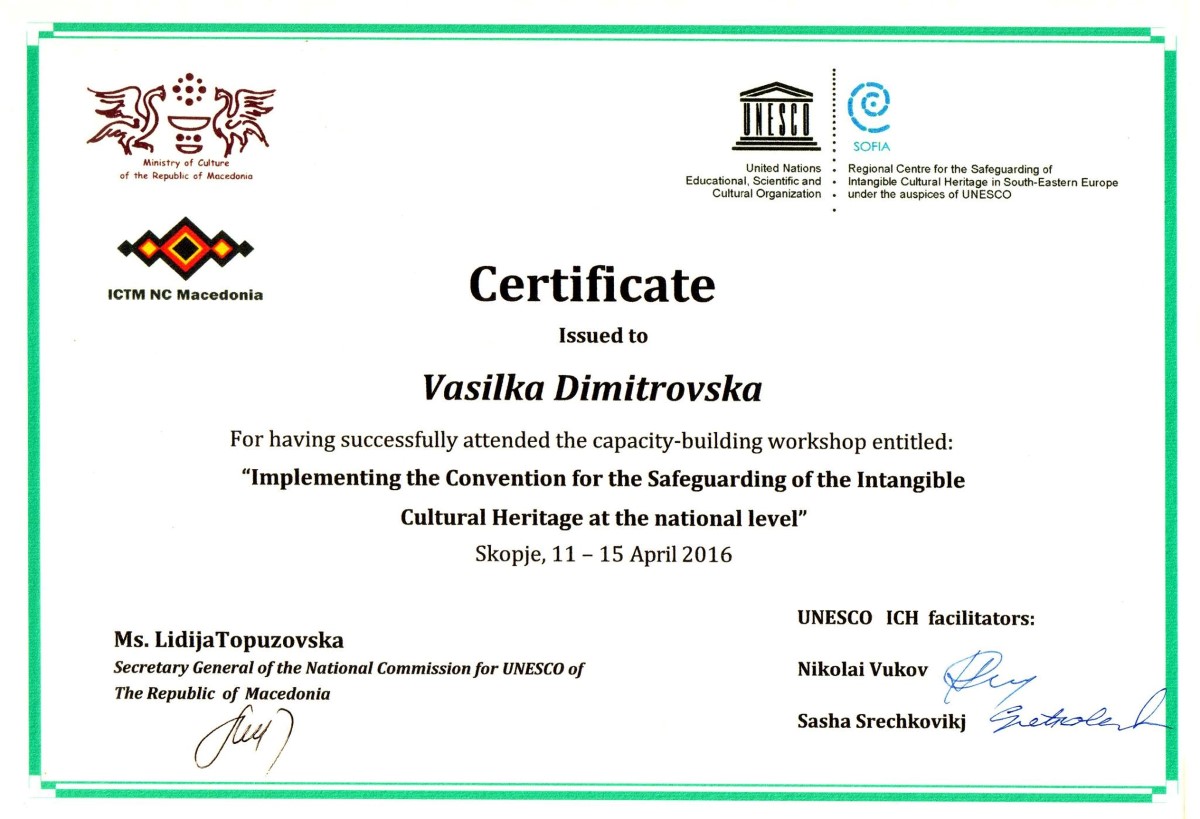
The module ‘Sustainable Development of Living Heritage‘ is developed and led by Vasilka Dimitrovska.

About the trainer

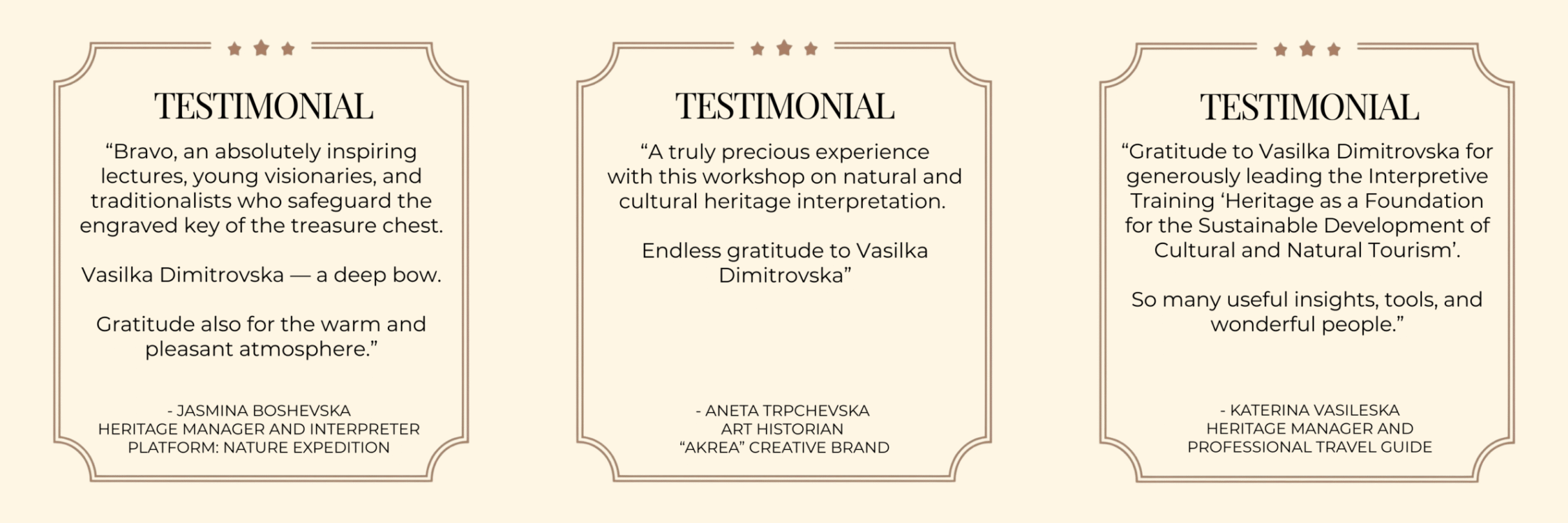
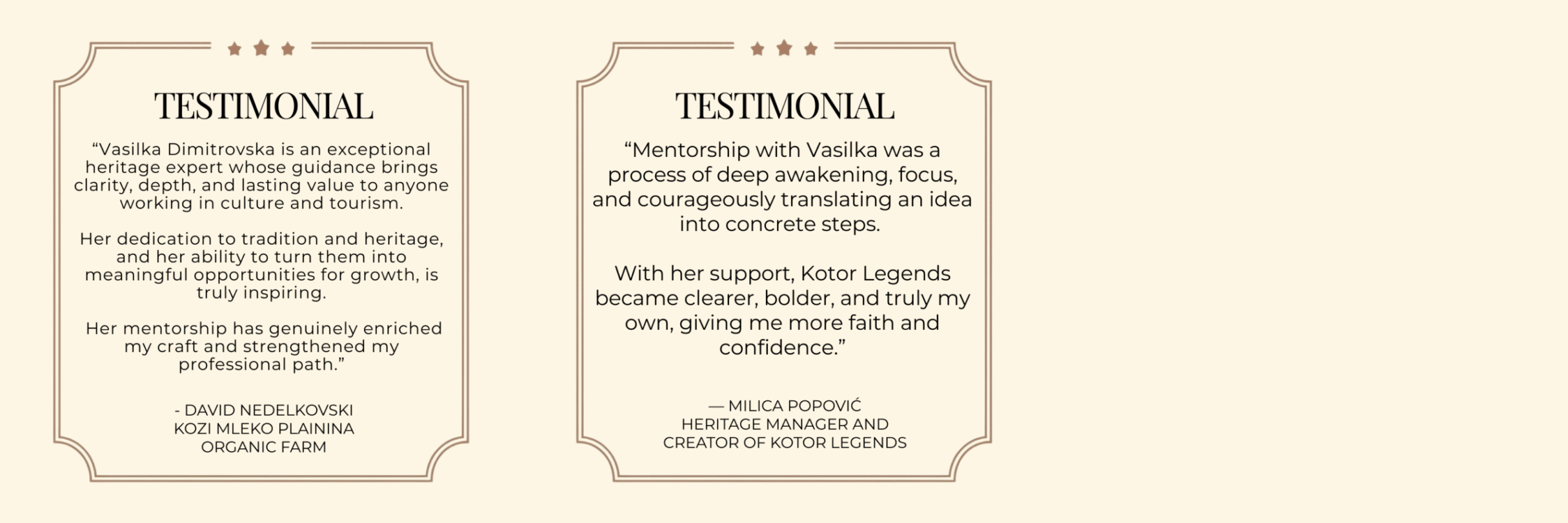
Vasilka Dimitrovska is a leading authority in heritage interpretation, holding a Master of Science in Archaeology and more than two decades of professional practice. She is the founder of KREAKTIVA – The Storytelling & Experience Design Studio, the creative engine behind her two flagship brands: Storytelling Skopje and Storytelling Macedonia.
She also serves as the Director of HAEMUS, a center for scientific research and promotion of culture.
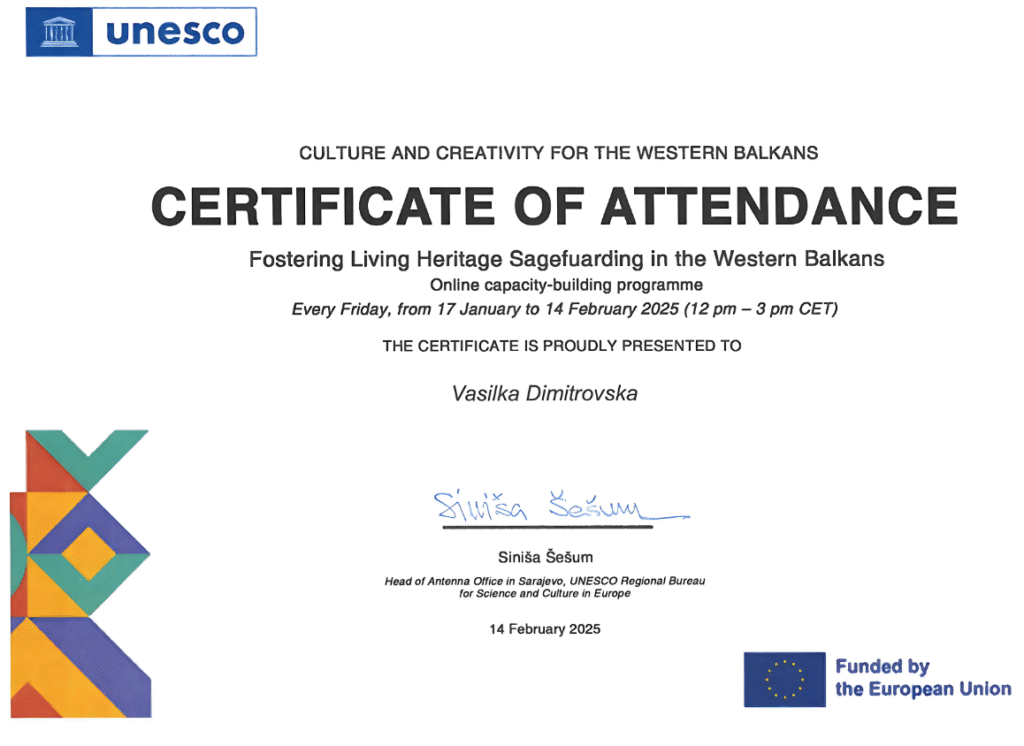
As a certified interpretive trainer accredited by Interpret Europe and an UNESCO alumni, Vasilka brings world-class expertise to every training she delivers. Her mission is to elevate how cultural, natural, and intangible heritage is communicated—through meaningful, value-based interpretation that resonates deeply with diverse audiences.
Since 2011, Vasilka has been an associate of the National Geographic Society and is widely recognized for her essential role in safeguarding the UNESCO-inscribed “Martinki” custom. In recent years, she has served as the permanent heritage consultant for Pivara Skopje AD (Coca-Cola HBC & Heineken N.V.), supporting corporate, educational, and community engagement initiatives.
A prolific author, Vasilka has written over 25 monographs, books, and professional manuals, alongside more than 50 scientific papers in archaeology, cultural heritage, and interpretation. Her portfolio includes the creation of international conferences, exhibitions, live interpretation programs, and hands-on educational modules such as “Grandma March Day” and “Young Explorer”, all designed to bring heritage closer to the public in inspiring and inclusive ways.
Why Train with Vasilka?
Through KREAKTIVA, Vasilka offers specialized, practice-oriented trainings that empower museums, cultural institutions, destinations, NGOs, creative teams, corporate clients, and heritage professionals to develop:
- Strong interpretive communication

- Engaging visitor-centered narratives
- Meaningful live interpretation programs
- Value-based storytelling
- Educational and community-focused experiences
- Creative formats for cultural and natural heritage
Her training style blends academic rigor, international best practices, and real-world experience from countless heritage projects across the Balkans and Europe.
 A Trainer Who Shapes the Future of Interpretation
With a career dedicated to transforming how societies connect with their heritage, Vasilka continues to mentor the next generation of interpretive guides, educators, and cultural leaders. Her approach is rooted in creativity, authenticity, and a deep respect for the values that heritage carries.
Through KREAKTIVA trainings, participants gain not only skills—but a new way of seeing, understanding, and communicating heritage.