
Skopje will be the European Capital of Culture in 2028.
But the title alone means nothing.
We can host countless events.
That has never been the question.
The real question is: will they leave a lasting impact?
In the 21st century, an exhibition made of posters on walls — something that could just as easily be a website or a PowerPoint — is no longer enough, especially for new generations. That model simply doesn’t work anymore.
Today’s audiences don’t want to just watch.
They want to participate. To explore. To touch. To solve. To be part of the story.
Culture today is not information.
It is experience.
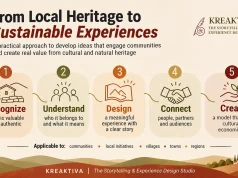
Every museum, every site, every event, every accommodation, can be designed as an experience.
And that is where real value is created.
This is why we need new formats:
interactive programs, heritage interpretation, storytelling, live experiences, facilitated activities, quests, living history, missions, and meaningful human interaction instead of passive observation.
A visitor might attend an event in Skopje, stay overnight in Kavadarci, and explore Ohrid the next day.
Each location can become part of one connected story.
When culture is experienced, visitors stay longer.
They spend more.
They move across the country.
They activate small businesses.
They strengthen the creative industries.
They help build a sustainable economy.
The European Capital of Culture is not a calendar of events.
It is a system of intentionally designed experiences.
And for that, we don’t need more stages.
We need more people who know how to transform heritage into meaningful, memorable journeys.
Time is short.
But if we start strategically and build capacity now, we can create something that lasts far beyond 2028.
It’s time to create a culture that is not only seen — but remembered for a lifetime.
Author
Vasilka Dimitrovska
Experience Designer & Cultural Innovation Strategist
CEO & Founder, Kreaktiva