27 September marks World Tourism Day, an opportunity to reflect not only on where people travel, but also on what makes a place worth experiencing.
When we talk about tourism in Macedonia, museums and archaeological sites are rarely discussed as tourism destinations in their own right. Yet the country has an extraordinary concentration of archaeological sites, historic places, museums and cultural landscapes that could play a much stronger role in the visitor economy.
Having heritage, however, is not the same as having a heritage experience.
From cultural resources to visitor destinations
Thousands of archaeological sites are registered across Macedonia, but only a small number are prepared for visitors and actively integrated into the tourism offer.
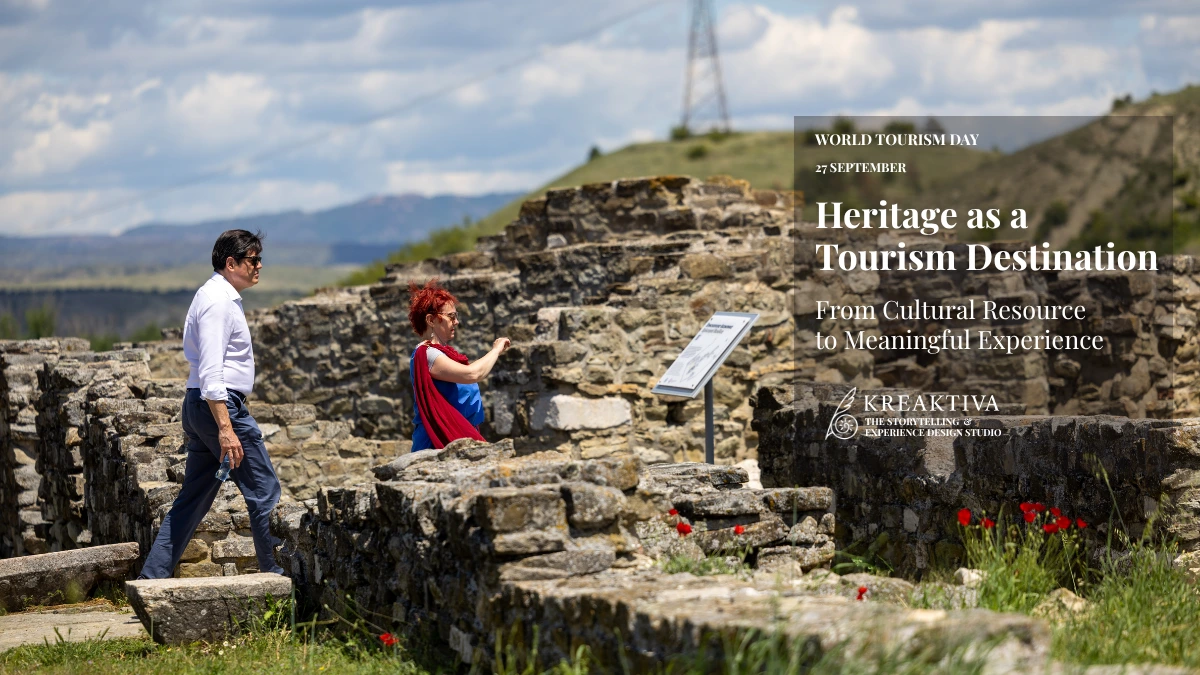
Stobi and Heraclea Lyncestis are among the better-known examples where archaeological heritage also functions as a recognizable visitor destination. Yet much of the country’s cultural heritage remains outside the everyday tourism experience.
The challenge is therefore not simply to attract more people to heritage places. It is to create reasons for people to engage with them, understand them and remember them.
This is where heritage interpretation becomes particularly important.
Interpretation creates connection
A museum object, archaeological structure or historic landscape carries enormous amounts of knowledge. But knowledge alone does not automatically create a meaningful visitor experience.
Interpretation can bridge that gap.
Through storytelling, interaction and thoughtfully designed experiences, heritage can become something visitors actively engage with rather than something they simply observe.
A visit can then move beyond seeing a monument or collection and become an opportunity to discover a story, understand a place and develop a personal connection with it.
That connection matters both for tourism and for heritage itself.
Heritage can contribute to sustainable tourism
Museums, archaeological sites and cultural institutions are often discussed primarily in terms of preservation, public funding and maintenance. Their potential role within sustainable tourism receives considerably less attention.
Yet well-designed heritage experiences can encourage visitors to spend more time in a destination, discover places beyond the most familiar attractions and engage more deeply with local culture.
This does not mean turning heritage into entertainment or compromising its authenticity.
It means creating the conditions in which professional knowledge, authentic places and meaningful visitor experiences can work together.
Designing experiences around heritage
This is also the field in which KREAKTIVA works: connecting heritage interpretation, storytelling and experience design to transform cultural resources into meaningful encounters for visitors.
The starting point is always the heritage itself.
The objective is not simply to make people look at it, but to help them understand why it matters.
Because having heritage is not enough.
Its long-term value also depends on whether people can experience it, connect with it and recognize why it deserves to be preserved for future generations.